---
title: 5 Tips for Choosing a Medical Packaging Plastic Extrusion Partner for the Medical and Pharmaceutical Industries
description: Read about 5 key capabilities that Impact brings to the table to consider when choosing an extrusion partner for your next medical packaging application.
image: https://blog.impactplastics.co/hubfs/Medical%20Packaging%20Campaign/Impact-Plastics-Barrier-Tray-Medical-Packaging-social.jpg
---
[](https://impactplastics.co)
[](https://impactplastics.co)
- [Markets](https://impactplastics.co/markets/)
- [Medical Packaging Kits & Trays](https://impactplastics.co/markets/medical-packagingkits-and_trays/)
- [Medical Equipment](https://impactplastics.co/markets/medical-equipment/)
- [Medical Device](https://impactplastics.co/markets/medical-device/)
- [Pharmaceutical Packaging](https://impactplastics.co/markets/pharmaceutical-packaging/)
- [Cosmetic Packaging](https://impactplastics.co/markets/cosmetic-packaging/)
- [Point of Purchase Display](https://impactplastics.co/markets/point-of-purchase-display/)
- [Consumer Goods Packaging](https://impactplastics.co/markets/consumer-goods-packaging/)
- [Building & Construction](https://impactplastics.co/markets/building-construction/)
- [Electronics Packaging](https://impactplastics.co/markets/electronics-packaging/)
- [Class A Surface Automotive](https://impactplastics.co/markets/class-a-surface-automotive/)
- [Industrial Automotive & Transportation](https://impactplastics.co/markets/industrial-automotive-transportation/)
- [Food Packaging Containers](https://impactplastics.co/markets/food-packaging-containers/)
- [Barrier Medical Packaging](https://impactplastics.co/markets/barrier-medical-packaging/)
- [Barrier Food Packaging Containers](https://impactplastics.co/markets/barrier-food-packaging-containers/)
- [Printing Rollstock](https://impactplastics.co/markets/printing-rollstock/)
- [Materials + Applications](https://impactplastics.co/materials-and-applications/)
- [Polypropylene (PP)](https://impactplastics.co/materials-and-applications/polypropylene-pp/)
- [Polystyrene (PS)](https://impactplastics.co/materials-and-applications/polystyrene/)
- [Polyethylene (PE)](https://impactplastics.co/materials-and-applications/polyethylene/)
- [ABS](https://impactplastics.co/materials-and-applications/abs/)
- [TPO](https://impactplastics.co/materials-and-applications/tpo/)
- [Thermoforming](https://impactplastics.co/materials-and-applications/thermoforming/)
- [Printing & Graphic Arts](https://impactplastics.co/materials-and-applications/printing-graphic-arts/)
- [Form Fill and Seal](https://impactplastics.co/materials-and-applications/form-fill-and-seal/)
- [Capabilities](https://impactplastics.co/capabilities/)
- [Custom Development](https://impactplastics.co/capabilities/custom-development/)
- [Performance Additives](https://impactplastics.co/capabilities/specialty-additives/)
- [Extrusion Capabilities](https://impactplastics.co/capabilities/extrusion-capabilities/)
- [About Us](https://impactplastics.co/about-us/)
- [Quality Control](https://impactplastics.co/about-us/quality-control/)
- [Sustainability](https://impactplastics.co/about-us/sustainability/)
- [Leadership](https://impactplastics.co/about-us/leadership/)
- [Careers](https://impactplastics.co/about-us/careers/)
- [Innovative Insights](https://blog.impactplastics.co/blog/)
- [Contact Us](https://impactplastics.co/about-us/contact-us/)
[Start Your Project](https://impactplastics.co/about-us/contact-us/)
[](https://impactplastics.co)
MENU
[Start Your Project](https://impactplastics.co/about-us/contact-us/)
[](https://impactplastics.co)
[Start Your Project](https://impactplastics.co/about-us/contact-us/)
-
[](https://impactplastics.co)

### January 12th, 2017
# 5 Tips for Choosing a Medical Packaging Plastic Extrusion Partner for the Medical and Pharmaceutical Industries
-
-
---
Over the past decade, Impact Plastics has directed technology investments and capital expenditures towards making improvements to our equipment and processes to better serve our customers the [medical packaging](https://impactplastics.co/markets/medical-packagingkits-and_trays/) and [medical device](https://impactplastics.co/markets/medical-device/) industry. Our experience from working with leading OEM medical device companies as their sole approved outside supplier has provided us with the knowledge and expertise to handle even the most critical applications. Continuous manufacturing in pharmaceutical plastic extrusion has further enhanced our efficiency and scalability, making it ideal for high-volume production.
---
Below are 5 key capabilities Impact brings to the table that are important to consider when choosing an extrusion partner for your next medical application:
1. [Proper Quality and Safety Certifications:](https://impactplastics.co/about-us/quality-control/)
Impact Plastics is an ISO 9001:2015 certified company at both locations and conducts routine internal and third party audits. At the materials level, all of the medical-grade resins that we carry in-house, with the exception of our utility grade, are FDA approved. In addition, Impact recently achieved [USP Class VI](https://blog.impactplastics.co/blog/usp-class-vi-plastic-sheet-for-medical-device-applications) certification for our proprietary formulations of [HIPS](https://info.impactplastics.co/usp-class-vi-material-solutions), [HDPE](https://info.impactplastics.co/usp-class-vi-material-solutions), [PP](https://info.impactplastics.co/usp-class-vi-material-solutions) and [PETG](https://info.impactplastics.co/the-new-petg-is-here-download-the-material-comparison-tds). Out of the six designations for plastics from General Chapter of the US Pharmacopeia and National Formulary, Class VI is the most comprehensive and stringent. Our supplier relationships and in-house resources give us the ability to achieve special certifications to help our customers meet the stringent quality and safety requirements mandated by the medical industry. 2. [New Material Development Capabilities:](https://impactplastics.co/capabilities/custom-development/)
It takes time to qualify and develop a trusting partnership with a supplier, and once you have accomplished this feat, the prospect of repeating the qualification process may seem daunting. Working with a plastic sheet extrusion partner who has the resources and capabilities to explore new product development could help make your life a bit easier next time a new project comes down the pipeline. At Impact we have always embraced and celebrated our entrepreneurial sprit and open-mindedness to [develop new products](https://icpg.co/materials-and-applications/form-fill-seal-ffs/). In addition, [our in-house quality lab & material testing facility](https://blog.icpg.co/tackling-material-replacement-initiatives-with-confidence) can help ensure that your most critical specifications are met.
Recently, Impact Plastics has launched two new products developed to advance innovation and solve key challenges within the medical device packaging market. Pharmaceutical plastic extrusion can alter the chemical properties of drug formulations, enhancing solubility, stability, and bioavailability. First, our XPP Medical Solutions offer a safe, [sustainable](https://blog.impactplastics.co/blog/opportunities-for-improving-sustainability-in-healthcare-packaging) and economical solution for PS & PVC replacement in medical device packaging. While polystyrene and PVC have historically been the material of choice for a vast range of medical and pharmaceutical packaging applications - from diagnostic kits and sterile barrier trays, to form-fill-seal unit-dosing pods, and much more. But lack of recycling options and sustainability challenges, health and safety concerns regarding presence of certain materials in PS and PVC, and the rising cost of materials, have sent OEM medical companies and converters in search of alternatives.
Pharmaceutical extrusion also plays a key role in creating advanced drug delivery systems that improve patient compliance, enable targeted treatment, and help reduce side effects. ICPG’s XPP™ polypropylene is a revolutionary mono-material rollstock solution that maintains all of the positive attributes of current PS and PVC materials – processing, function, safety, quality, cost – in the form of a more sustainable and recyclable solution that offers drop-in process compatibility for PS & PVC replacement made easy.
Explore the benefits of switching to XPP-M including:
- Drop-in process compatibility in thermoforming & FFS
- Improved OTR & MVTR barrier performance
- Mechanical improvements
- Cost savings vs PS & PVC
In addition, ICPG has [launched a new offering of PETG](https://blog.impactplastics.co/blog/5-benefits-of-using-petg-from-impact-plastics) for medical device, pharmaceutical & healthcare packaging applications. Materials such as PETG used in thermoformed medical, pharmaceutical and healthcare packaging applications play an essential part in the greater medical supply chain to protect these lifesaving products. The critical function of these materials necessitates a dependable, reliable and secure supply chain for these packaging materials. However, recent disruptions and challenges have called into question the resiliency and reliability of the PETG supply chain in the US. With the majority medical packaging & medical device applications dependent on consistent supply of PETG materials, the risk associated with a single-source supply presents a significant concern. Extrusion processes are also widely used in food packaging to produce high-quality films and layers for various food packaging applications.
Impact Plastics has collaborated with a specialty resin supplier to offer a [new source of PETG supply](https://info.impactplastics.co/the-new-petg-is-here-download-the-material-comparison-tds) for rigid thermoformed and form-fill-seal healthcare packaging applications to help converters and OEM medical device manufacturers mitigate that risk and secure the safety and reliability of their PETG supply. Our PETG solutions offer the same quality, safety, and performance as incumbent solutions to streamline validation for your most critical PETG medical, pharmaceutical, and healthcare packaging applications and meet the following certifications:
- EU NR 10/2011
- US FDA 21CFR 177.1315 \[b\] \[1\]
- USP Class VI & Cytotoxicity per ISO 10993-5:2009
1. **Clean Manufacturing Environment:**
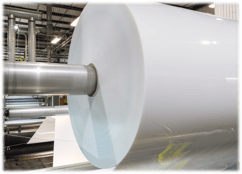
Manufacturing can get dirty – which is why for medical applications it is especially important to work with a plastic sheet extrusion partner who understands the importance of maintaining a clean environment, even when a clean room is not required. Bugs, dust and dirt are all extreme cause for concern when working on a medical extrusion application. In both of our factories we have installed a positive air pressure system that prevents particulate from the outside environment - such as that small flying insect, or dust/dirt - from entering the manufacturing facility and contaminating the material while in production. In addition to keeping dirt and grime out of the manufacturing environment, this air pressure system filters the air down to 3 microns of particulate per square foot. Particles in the air become a critical concern when servicing the medical industry as any foreign particles that becomes imbedded in the material create the perception of dirty and unsterile material. Working with an extrusion partner who is well equipped to prevent contamination can help stop this problem before it starts. 4. **Gauge Control:**
In one of our previous blog posts, [“How the wrong gauge can cost you,”](https://blog.impactplastics.co/blog/how-over-gauge-material-can-send-you-over-budget) we focused our attention on the importance of gauge control from a cost perspective. However, this is not the only benefit our customers can realize from working with a supplier that emphasizes consistent gauge control. Tight gauge tolerance and uniform gauge control can increase efficiencies drastically in thermoforming processes. Impact’s ability to produce consistent, tight tolerance extruded plastic sheet reduces the need for adjustments during thermoforming runs, allowing for increased operating efficiencies. 5. [Investments in Extrusion Technology & Testing Equipment:](https://impactplastics.co/capabilities/extrusion-capabilities/)
In the plastic sheet extrusion industry, the quality of your equipment is an integral part in being able to produce a product suitable for critical applications. For this reason, Impact Plastics has always placed an emphasis on the quality of our technology and performs continued maintenance on all of our extrusion lines so they operate at peak performance. In addition, Impact recently upgraded our office facilities to include a new quality lab to ensure that we are meeting customer specs for every production run. Working with a plastic sheet extrusion supplier that understands the importance of maintaining & investing in their extrusion technology and testing equipment will ensure that you continue to get consistent and high quality material.
---
Want to learn more about our capabilities? [Contact our team today ](https://impactplastics.co/about-us/contact-us/)to learn how Impact Plastics can help you with your plastic sheet extrusion supply needs.
## Introduction to Plastic Extrusion and Twin Screw Extruders
Plastic extrusion is a fundamental manufacturing process that transforms raw plastic materials into continuous, uniform profiles used across a wide range of industries. In the plastic extrusion process, thermoplastic material—such as PVC, polyethylene, or polypropylene—is fed into a heated barrel, often in the form of plastic pellets as the raw material. A rotating screw conveys and melts the plastic—typically a single rotating screw in single screw extruders, though a twin screw extruder may be used for more complex applications. The molten plastic is then forced through a die, shaping it into the desired profile. Plastic extruders, including those with multiple extruders, can be used to combine different materials or multiple materials in coextrusion processes to create multi-layered products with tailored properties. This allows for the production of a wide variety of items, whether that be tubing, plastic sheets, plastic films, flexible plastic films, shopping bags, window frames, other custom shapes, pipes, or to produce components for various industries. As the molten plastic flows through the die, it takes on its final form before being cooled and solidified into extruded plastic products. Cooling rolls and other techniques can influence the surface texture and wall thickness of products, which is especially important in tubing extrusion.
Blow film extrusion is a specialized process for producing thin, flexible plastic films used in packaging materials such as shopping bags and food packaging. This method involves inflating a molten plastic tube with compressed air to form a bubble, which is then cooled and flattened to create uniform, high-quality films. Blow film extrusion is known for its high-speed, high volume production capabilities, making it ideal for manufacturing flexible plastic films for packaging applications.
This extrusion process is a preferred manufacturing method in the medical and pharmaceutical industries due to its ability to produce high-volume, consistent, and precise components. The continuous nature of plastic extrusion allows for tight tolerances and repeatability, which are essential for applications like medical tubing, packaging, and device components. It is especially suitable for high volume production of uniform plastic components, including pipes, window frames, and automotive wiring, where electrical insulation is critical. By selecting the appropriate plastic materials, manufacturers can tailor the chemical and mechanical properties of extruded plastics to meet the stringent requirements of various industries, ensuring safety, durability, and performance in every product.
## Extrusion Technologies
Extrusion technologies encompass a variety of manufacturing methods designed to produce products with a consistent cross-sectional profile. In plastic extrusion, these technologies utilize heat and pressure to transform plastic materials into continuous shapes such as tubing, sheets, and custom profiles. The plastic extrusion process is highly valued across various industries—including construction, packaging, automotive, and especially the medical and pharmaceutical industries—due to its efficiency and ability to produce high volumes of uniform products.
Among the most advanced extrusion technologies are twin screw extruders, which feature two intermeshing screws that rotate within the barrel. This design offers improved mixing capabilities, making it ideal for processing multiple plastic materials or incorporating additives that enhance the properties of the final product. Twin screw extruders are particularly well-suited for manufacturing complex medical devices and pharmaceutical packaging, where precise control over material composition and consistency is critical. As extrusion technologies continue to evolve, they enable manufacturers to meet the demanding requirements of modern applications, delivering reliable, high-quality plastic extrusions for a wide range of uses.
---
## Plastic Extruder Components
A plastic extruder is a sophisticated piece of equipment, with each component playing a vital role in the extrusion process. The journey begins at the hopper, where raw plastic material—often in the form of pellets or granules—is loaded and fed into the extruder. From there, a rotating screw conveys the plastic material through a heated barrel, gradually melting it into a uniform, molten plastic.
As the molten plastic advances, it passes through a screen pack, which filters out impurities and ensures a smooth, consistent flow. The breaker plate, positioned just before the die, further refines the molten material by removing contaminants and equalizing pressure. The molten plastic is then forced through a die, which shapes it into the desired shape—be it tubing, sheets, or other custom profiles.
Once the plastic exits the die, it enters a cooling system, such as a water bath or cooling rolls, which rapidly solidifies the extruded plastic and locks in its final form. Each of these components—from the hopper and rotating screw to the breaker plate, screen pack, and cooling system—works in harmony to produce high-quality extruded plastic products with precise dimensions and consistent properties.
- [](https://impactplastics.co/)
© Impact Consumer Products Group – All Rights Reserved 2026
- [Privacy Policy](https://impactplastics.co/privacy-policy/)
5 Highland Drive
Putnam, CT 06260
Phone: 860-963-1976
General Fax: 860-963-1998
###### Stay Connected
- [Twitter](https://twitter.com/Impact_Plastics)
- [LinkedIn](https://www.linkedin.com/company/impact-plastics-ct/)